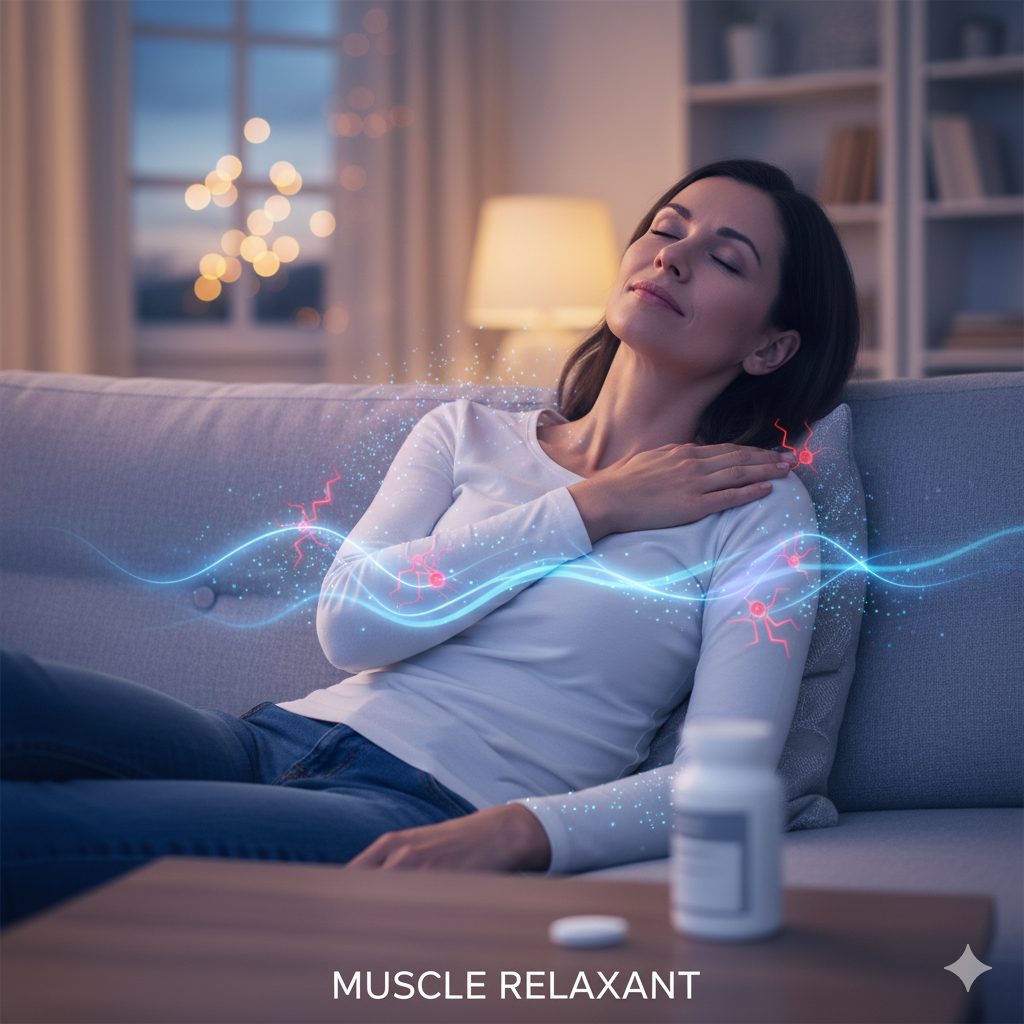
What Are Muscle Relaxants?
Muscle relaxants are a class of medications specifically designed to alleviate muscle spasms, tension, and pain by interfering with the nerve impulses that control muscle contractions. These medications work by either blocking the release of neurotransmitters that stimulate muscle contractions or enhancing the activity of neurotransmitters that promote muscle relaxation. By reducing muscle tone and relieving muscle spasms, muscle relaxants temporarily relieve discomfort and pain associated with musculoskeletal conditions, such as back pain, fibromyalgia, and muscle strains.
Here are the main types of muscle relaxants:
• Benzodiazepines
• Non-Benzodiazepines
• Antispastics
• Direct-Acting Agents
• Centrally Acting Agents
• Topical Agents
What is The Mechanism of Action of Muscle Relaxants?
Muscle relaxants work by interfering with the nerve impulses that control muscle contractions. The mechanism of action of muscle relaxants can vary depending on the specific type of medication, but most work by:
• Blocking neurotransmitters: Muscle relaxants such as acetylcholine can block the release of neurotransmitters, which stimulates muscle contractions.
• Enhancing inhibitory neurotransmitters: Muscle relaxants can enhance the activity of inhibitory neurotransmitters such as gamma-aminobutyric acid (GABA), which promotes muscle relaxation.
• Interfering with muscle contraction: Muscle relaxants can directly interfere with the muscle contraction process by blocking the release of calcium ions or inhibiting muscle protein activity.
Some common mechanisms of action of specific muscle relaxants include:
• Benzodiazepines (e.g., diazepam): Enhance the activity of GABA, leading to muscle relaxation.
• Baclofen: Acts as a GABA receptor agonist, leading to muscle relaxation.
• Cyclobenzaprine: Blocks the release of acetylcholine, leading to muscle relaxation.
• Tizanidine: Acts as an alpha-2 adrenergic receptor agonist, leading to muscle relaxation.
When Are Muscle Relaxants Used?
Muscle relaxants alleviate muscle spasms, tension, and pain associated with various musculoskeletal conditions. Here are some common scenarios when muscle relaxants are used:
Acute Muscle Injuries
• Muscle strains: Muscle relaxants can help relieve pain and spasms associated with muscle strains.
• Back pain: Muscle relaxants can help alleviate back pain caused by muscle spasms or strains.
Chronic Musculoskeletal Conditions
• Fibromyalgia: Muscle relaxants can help manage muscle pain and spasms associated with fibromyalgia.
• Multiple sclerosis: Muscle relaxants can help relieve muscle spasms and stiffness associated with multiple sclerosis.
• Muscular dystrophy: Muscle relaxants can help manage muscle spasms and pain associated with muscular dystrophy.
Spasticity and Muscle Spasms
• Spinal cord injuries: Muscle relaxants can help manage muscle spasms and spasticity associated with spinal cord injuries.
• Cerebral palsy: Muscle relaxants can help relieve muscle spasms and stiffness associated with cerebral palsy.
• Parkinson's disease: Muscle relaxants can help manage muscle rigidity and spasms associated with Parkinson's disease.
Other Conditions
• Tension headaches: Muscle relaxants can help relieve muscle tension and pain associated with tension headaches.
• Temporomandibular joint (TMJ) disorders: Muscle relaxants can help manage muscle spasms and pain associated with TMJ disorders.
What Are the Benefits of Muscle Relaxants?
There are several potential benefits of muscle relaxants, including:
Relief from Muscle Spasms and Pain
• Rapid relief: Muscle relaxants can quickly relieve muscle spasms and pain.
• Reduced muscle tension: They help relax muscles, reducing tension and stiffness.
Improved Mobility and Function
• Increased range of motion: Muscle relaxants can help improve mobility and range of motion.
• Enhanced functional ability: They enable individuals to perform daily activities more easily.
Reduced Anxiety and Stress
• Anxiolytic effects: Some muscle relaxants, like benzodiazepines, have anxiolytic properties, reducing anxiety and stress.
• Promoting relaxation: Muscle relaxants can help individuals relax and reduce muscle tension.
Sleep Improvement
• Improved sleep quality: Muscle relaxants can help individuals with muscle spasms or pain sleep better.
• Reduced sleep disturbances: They can reduce sleep disturbances caused by muscle discomfort.
Other Benefits
• Reducing inflammation: Some muscle relaxants have anti-inflammatory properties, reducing inflammation and promoting healing.
• Relieving menstrual cramps: Muscle relaxants can help alleviate menstrual cramps and other symptoms associated with PMS.
Are There Any Side Effects of Muscle Relaxants?
Yes, muscle relaxants can have side effects, some of which can be serious. Here are some common side effects:
Common Side Effects
• Drowsiness: Many muscle relaxants can cause drowsiness, impairing cognitive function and motor skills.
• Dizziness: Muscle relaxants can cause dizziness, lightheadedness, and fainting.
• Headaches: Some muscle relaxants can cause headaches, including migraines and tension headaches.
• Nausea and Vomiting: Muscle relaxants can cause stomach upset, nausea, and vomiting.
• Fatigue: Muscle relaxants can cause fatigue, lethargy, and a general feeling of being "out of it."
Less Common Side Effects
• Allergic Reactions: Some people may be allergic to certain muscle relaxants, which can cause an allergic reaction.
• Seizures: Certain muscle relaxants, such as baclofen, can cause seizures, especially in high doses.
• Dependence and Withdrawal: Muscle relaxants can be habit-forming, and stopping them abruptly can lead to withdrawal symptoms.
• \Interactions with Other Medications: Muscle relaxants can interact with other medications, including blood thinners, and decrease their effectiveness.
Serious Side Effects
• Respiratory Depression: Muscle relaxants can slow down breathing, which can be life-threatening in severe cases.
• Cardiovascular Problems: Certain muscle relaxants can increase heart rate and blood pressure, which can be problematic for people with pre-existing cardiovascular conditions.
• Liver Damage: Some muscle relaxants, such as carisoprodol, can cause liver damage when taken in high doses or for extended periods.
How to Take Muscle Relaxants?
Here's a step-by-step guide on how to take muscle relaxants safely and effectively:
Before Taking Muscle Relaxants
• Consult a doctor: Muscle relaxants should only be taken under the guidance of a healthcare professional.
• Disclose medical history: Inform your doctor about any medical conditions, allergies, or medications you're taking.
• Follow dosage instructions: Carefully follow the instructions provided by your doctor or pharmacist.
Taking Muscle Relaxants
• Take with food or milk: Some muscle relaxants can cause stomach upset; taking them with food or milk may help alleviate this.
• Swallow tablets whole: Do not crush or chew tablets, which can affect their absorption.
• Take at bedtime: If muscle relaxants are prescribed for nighttime use, take them at bedtime to minimize daytime drowsiness.
• Avoid mixing with other substances: Do not take muscle relaxants with other substances that can cause drowsiness, such as alcohol or sedatives.
While Taking Muscle Relaxants
• Monitor side effects: Inform your doctor if you experience any side effects, such as dizziness, drowsiness, or nausea.
• Avoid driving or operating heavy machinery: Muscle relaxants can impair cognitive function and motor skills.
• Avoid alcohol and recreational substances: These can interact with muscle relaxants and increase the risk of adverse effects.
Conclusion
Muscle relaxants can be an effective treatment option for alleviating muscle spasms, tension, and pain. While they offer numerous benefits, including rapid relief and improved mobility, it's essential to acknowledge their potential side effects and interactions. By understanding the different types of muscle relaxants, following proper dosage instructions, and monitoring side effects, individuals can safely harness the therapeutic benefits of these medications. Ultimately, muscle relaxants should be used judiciously and under the guidance of a healthcare professional to ensure optimal treatment outcomes and minimize risks.
________________________________________
References
1. https://pubmed.ncbi.nlm.nih.gov/18225966/
2. https://pubmed.ncbi.nlm.nih.gov/32279727/
3. https://pmc.ncbi.nlm.nih.gov/articles/PMC8262447/
4. https://pubmed.ncbi.nlm.nih.gov/15276195/
5. https://pmc.ncbi.nlm.nih.gov/articles/PMC6464310/
6. https://pubmed.ncbi.nlm.nih.gov/39298168/
7. https://pubmed.ncbi.nlm.nih.gov/34233900/
Medical Disclaimer
The information provided in this article is for educational and informational purposes only. It is not intended as medical advice and should not be used to diagnose, treat, cure, or prevent any medical condition. Always consult with a qualified healthcare professional before making decisions about your health or treatment.